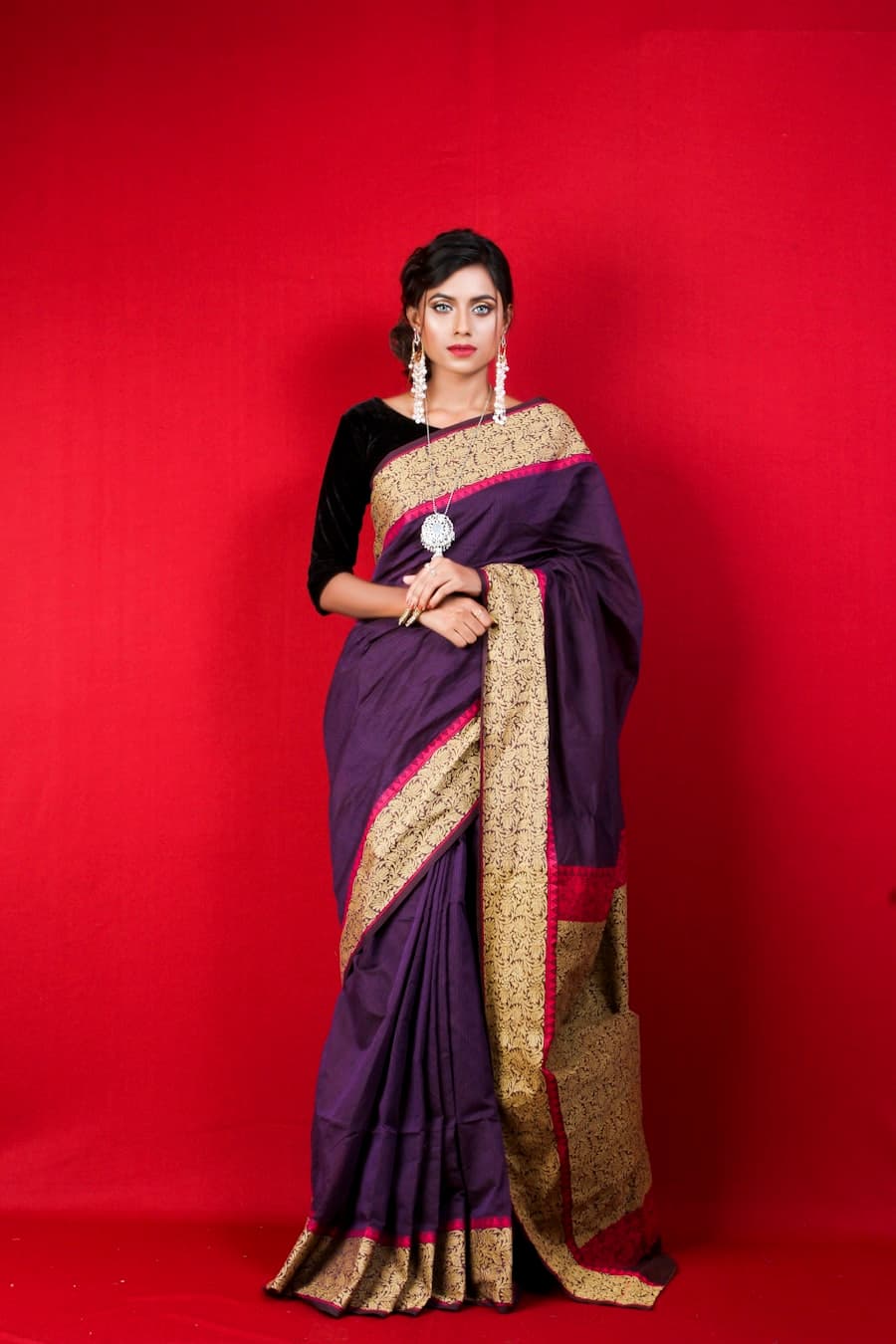
Spiritual dressing on Buddha Purnima is an exercise in restraint. By stripping away the heavy zari and jewel tones, we find a sartorial middle path that prioritises breathability and light-reflecting neutrals.
Chanderi Silk-Cotton Kora Saree
- Region
- Chanderi, Madhya Pradesh
- Fabric
- Silk warp, cotton weft
- Technique
- Hand-loomed with a simple 'patti' border
- Price band
- ₹12,000 — ₹45,000
The Chanderi saree is the definitive summer textile. The silk provides a subtle sheen for the occasion, while the cotton ensures the fabric doesn't cling to the skin. In ivory, it becomes a canvas for the person wearing it. It is translucent, breathable, and holds its shape through a full day of activity.
The traditional colour of purity and mourning in Buddhist contexts, adapted here for high-summer elegance.
A grounded neutral that hides the inevitable dust of a May commute better than pure white.
The only acceptable 'colour' for this edit, nodding to ancient jade carvings and copper-patina stupas.
The raw state of silk before processing. It possesses a matte finish that reads as intellectual rather than decorative.
“Linen and fine cotton are the fibres of the thinker. In the heat of May, ivory isn't just a colour choice; it is a thermal necessity that happens to look incredibly sharp.”
The Vihara Traditionalist
An ivory Chanderi saree paired with a matching high-neck cotton blouse. Jewellery should be restricted to a single strand of sandalwood beads or small silver studs. Footwear must be easy to remove: leather kolhapuris are the only logical choice. This look is about silence and respect.
- Ivory Chanderi saree
- High-neck cotton blouse
- Sandalwood beads
- Tan kolhapuris
The Power Neutral
A long oat-beige silk-linen kurta with wide-leg trousers. No dupatta. A structural silver cuff on one wrist and a sharp watch on the other. This translates the spiritual calm of the morning into a commanding presence for a 4 PM boardroom meeting. It says you are unbothered by the heat.
- Silk-linen long kurta
- Wide-leg trousers
- Silver cuff
- Leather slides
The Minimalist Bride
For those choosing Buddha Purnima for a civil ceremony, a heavy lehenga is a mistake. Instead, a bone-white organza saree with delicate silver 'buttis'. Pair with an emerald choker to provide the only pop of colour. It is sophisticated, light, and photographs with a crispness that heavy gold cannot match.
- Bone-white organza saree
- Silver thread blouse
- Emerald choker
- Sleek low bun
The ek-nal weaving technique creates a fabric so light it is often called 'woven air'. For a Vihara visit involving long periods of sitting or walking in the sun, this weight reduction is a functional luxury.
Buddha Purnima commemorates the birth, enlightenment, and death of Gautama Buddha. In India, followers often visit the Vihara (monastery) dressed in white to symbolise the 'middle way'—a path of moderation. Unlike the heavy silks of Diwali or the bright cottons of Holi, this day is marked by a deliberate move toward the understated. The choice of ivory over white reflects a contemporary preference for warmer, more skin-flattering neutrals that still honour the tradition of purity.
- Aditi Rao HydariA film screening in Mumbai, wearing a minimalist ivory Chanderi saree with a simple sleeveless blouse
- Kangana RanautVisiting a spiritual centre, opting for a crisp white cotton mulmul saree with a thin gold border
- Sobhita DhulipalaPromotional event, wearing an unbleached linen saree with silver jamdani motifs
Some of these links are affiliate links. If you buy through them, Picsila may earn a small commission. It does not change the price you pay, and we only recommend pieces we would buy ourselves.
Tomorrow's edit lands at 7am.
One outfit decision a day, never a fluffy one. Free.
Subscribe to the daily edit