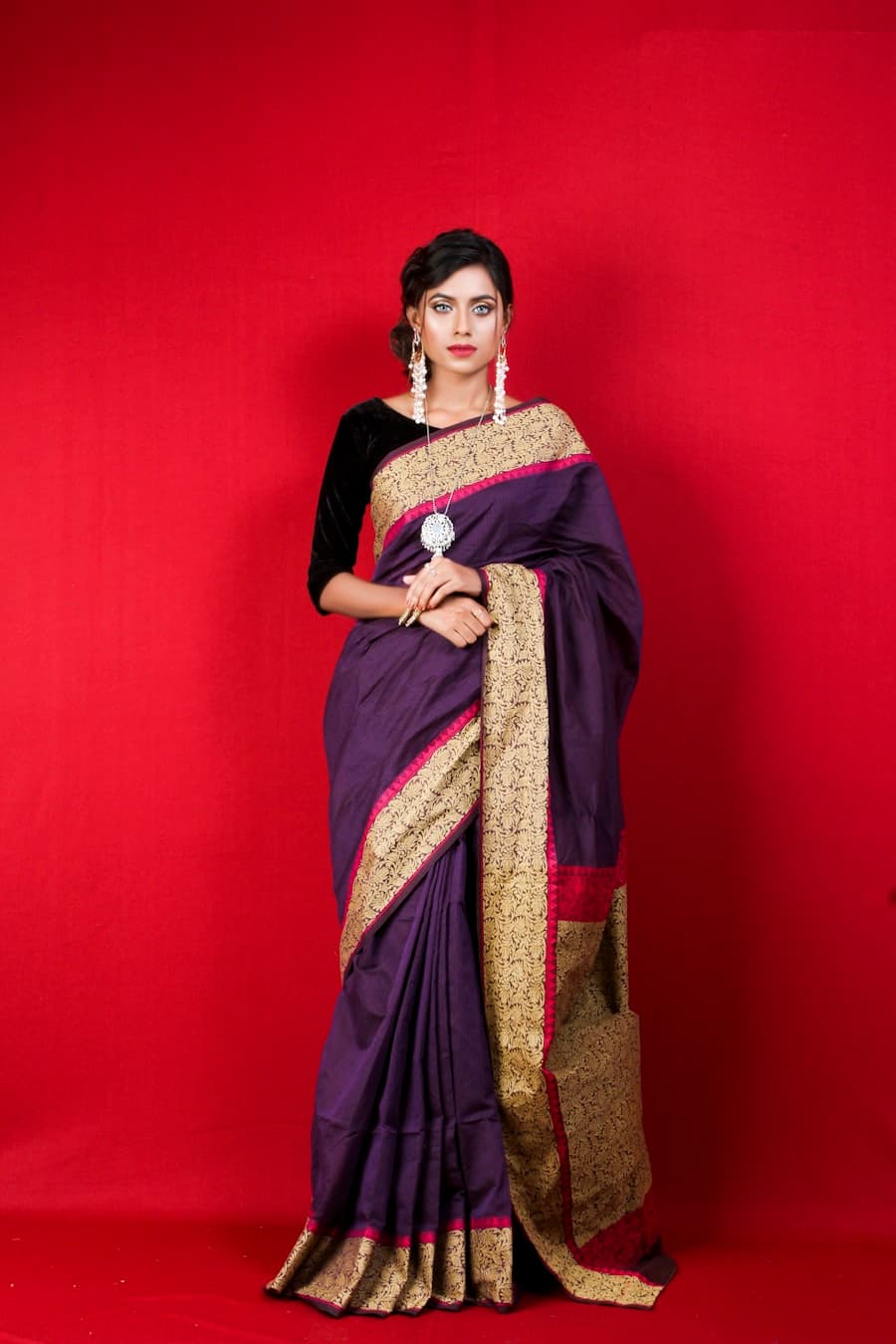
Morning ceremony outfits fail for one reason , they are picked at night, under tungsten light, for a function that happens at 10am under direct sun. Saffron-yellow gota patti reads correctly in that light. A pastel chiffon does not. The palette is the prescription.
Saffron gota patti kurta-churidar with georgette dupatta
- Region
- Rajasthan (Jaipur and Bikaner)
- Fabric
- Mulberry silk-cotton kurta with hand-applied gota patti gold-leaf trim, georgette dupatta
- Technique
- Gota patti , pure silver and gold-leaf woven ribbon appliquéd by hand onto the kurta panels and dupatta border
- Price band
- ₹8,000 — ₹85,000
Gota patti is the only ethnic trim engineered for daylight. The ribbon is woven from flattened silver wire, then gilt with gold leaf, which means the surface is metal rather than synthetic film. In the 10am sun it reads as warm and dimensional rather than plasticky. A saffron silk-cotton kurta with parrot-green or off-white gota borders, paired with a churidar and a sheer georgette dupatta worn front-falling, is the most photographed mehendi-guest silhouette in Jaipur and Udaipur weddings. The Punjabi alternative is a phulkari suit , geometric darning embroidery on khaddar , which photographs flatter but holds its own at a Chandigarh or Amritsar function where the dress code leans regional.
The base note of the haldi function. Marigold garlands are the only flower used because the colour is associated with Surya and with married prosperity in most Hindu traditions.
The mehendi-leaf green. Pairs against marigold the way these two colours grow together in North Indian gardens. The Punjabi phulkari standard.
The Rajasthani gota patti ground colour. Reads as bridal-mother appropriate without competing with the bride's yellow.
The Tamil and South Karnataka haldi shade. Closer to kumkum than to lemon. Reads warmer on camera than North Indian yellow.
The colour mehendi actually dries to. Worth knowing because any cream or pale gold trim near the hands will pick up stain marks by lunchtime.
“Real gota is silver wire flattened into ribbon, then dipped in gold. Plastic gota does not catch the morning sun the same way. At a haldi function the sun is your only light, so the metal in the work is what the camera actually sees.”
The matriarch in saffron, not yellow
Skip the bridal marigold. A deep saffron or tangerine gota patti suit, with white-silver gota rather than gold, signals position without competing. Pair with uncut polki jhumkas, a single strand of basra pearls, and a kundan haath phool on one hand only , the other hand stays free for the mehendi the bride's friends will insist she gets too. Hair in a low side bun, no veil. This is the most photographed mother-of-the-bride read at a Jaipur or Udaipur mehendi.
- Deep saffron gota patti kurta
- White georgette dupatta with silver gota border
- Polki jhumkas and basra pearls
- Single haath phool, not a pair
When two functions are stacked into one morning
Bengaluru and Hyderabad weddings increasingly merge haldi and mehendi into one 9am-to-1pm window. The outfit has to survive turmeric paste and four hours of sitting on the floor. A washable cotton-silk gota patti kurta in marigold with a parrot-green chiffon dupatta is the answer. Skip the churidar , wear a salwar with elastic at the waist. Minimal jewellery, oxidised silver only, because real polki and turmeric paste do not mix. Hair tied back with a fresh mogra string.
- Cotton-silk marigold gota kurta
- Parrot-green chiffon dupatta
- Loose salwar, not churidar
- Oxidised silver jhumkas only
Dressing for the candid, not the group shot
If you know the wedding photographer is going to spend the morning shooting close-ups of hands and faces, dress for the crop. White-and-silver gota patti on a pale lemon ground reads cleaner than saturated yellow at close range. A georgette dupatta with a thick silver gota border worn over one shoulder catches movement when you walk. Statement chaandbalis, no neckpiece. A nath if your nose is pierced. Hair in a sleek middle-parted bun with a single gajra around it. The picture you end up framed in is almost always a candid.
- Pale lemon kurta with white-silver gota
- Heavy silver-bordered dupatta
- Statement chaandbalis
- Sleek bun with gajra
Mehendi cones are applied between 9am and noon so the paste dries before the lunch break. That puts the photographer working in direct overhead sun, the worst light for pastels and synthetics. Outfits with real metal trim and saturated dye reflect cleanly under that light. Chiffon and georgette in mint or peach go grey on camera.
The mehendi ceremony arrived in India through Persian and Mughal courts around the 10th century, where henna was already a marriage rite. It fused with the older Indian haldi function, in which turmeric paste is applied to the bride and groom on the morning of the wedding. Turmeric is treated as anti-evil-eye and as a fertility marker in nearly every Hindu household, which is why the haldi yellow is non-negotiable. Regional practice diverges sharply from there. Punjabi mehendis are loud and choreographed, with phulkari embroidery and dhol music. Rajasthani mehendis run quieter and longer, with gota patti and ghoomar performances by the women of the family. Tamil weddings fold the ritual into the kalyanam morning itself, with turmeric applied during the nalangu, and outfits stay closer to the kumkum-and-saffron palette than to the North Indian marigold-and-green one.
- Anushka SharmaHer 2017 Tuscany mehendi in a Sabyasachi marigold-yellow lehenga with mirror work and a green-and-pink dupatta
- Deepika PadukoneMehendi at her Bengaluru wedding to Ranveer Singh in a yellow Sabyasachi anarkali with gota and zardozi work
- Kiara AdvaniHer Jaisalmer mehendi in a Manish Malhotra yellow lehenga with mirror, gota and resham embroidery
Some of these links are affiliate links. If you buy through them, Picsila may earn a small commission. It does not change the price you pay, and we only recommend pieces we would buy ourselves.
Tomorrow's edit lands at 7am.
One outfit decision a day, never a fluffy one. Free.
Subscribe to the daily edit