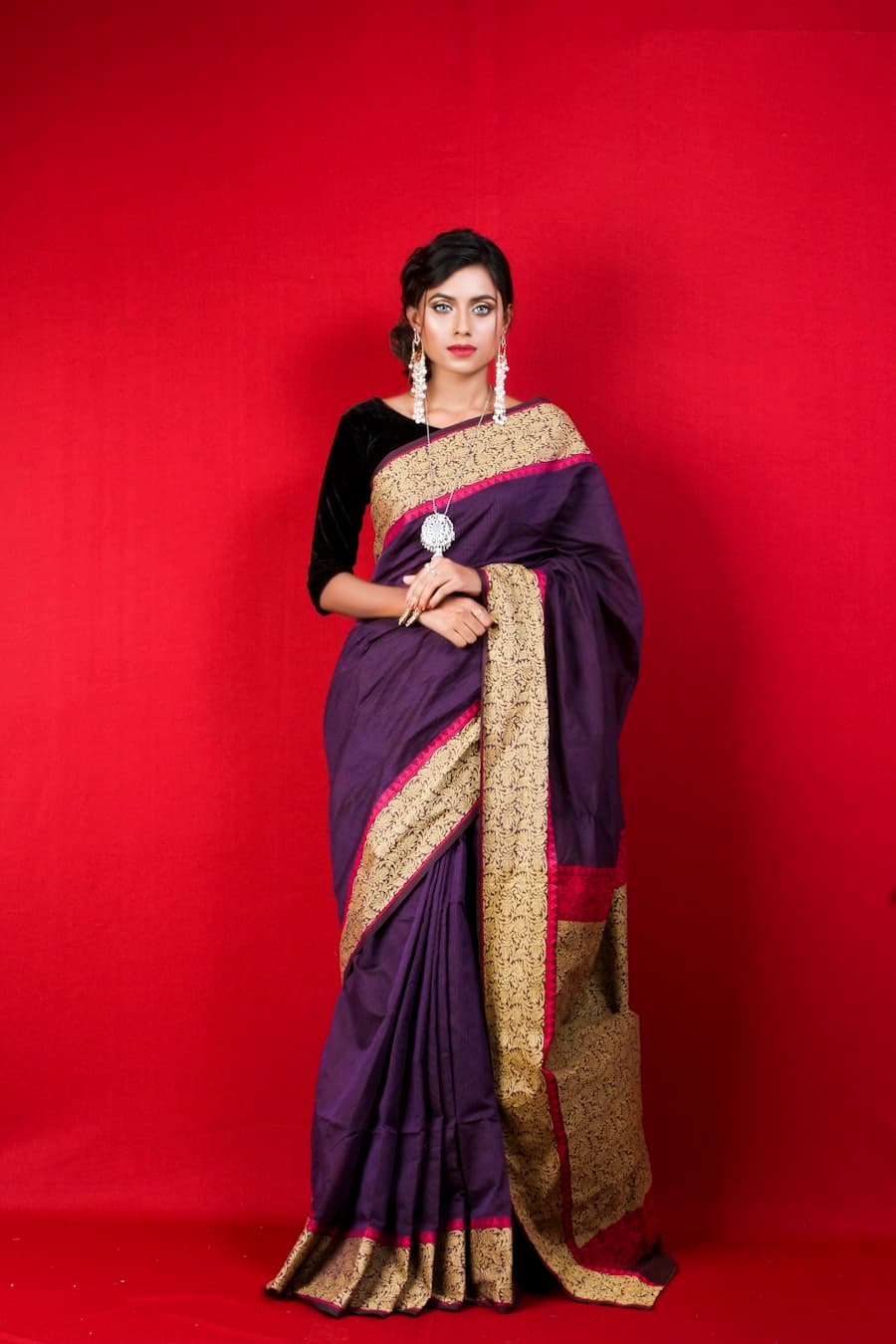
Kantha is more than just a textile technique; it is a profound record-keeping practice. Bengali grandmothers, with their simple running stitch, wove narratives of family life, daily rituals, and cherished memories into layers of old saris, transforming forgotten fabric into living documents of their heritage.
Kantha Embroidered Silk Saree
- Region
- Bengal, primarily West Bengal and Bangladesh
- Fabric
- Tussar silk or cotton, layered
- Technique
- Running stitch (Kantha stitch) hand embroidery, often depicting folk motifs, flora, fauna, and daily life scenes
- Price band
- ₹12,000 — ₹85,000
Kantha, meaning 'rag' in Sanskrit, traditionally involved layering old cotton dhotis and saris together and stitching them with a simple running stitch to create quilts (nakshi kantha). Today, the technique graces new silk and cotton fabrics, transforming them into exquisite sarees, stoles, and home furnishings. The beauty lies in the texture created by the densely packed stitches, often featuring intricate patterns of trees of life, animals, human figures, and geometric designs.
Often derived from natural dyes, symbolising depth and connection to traditional practices.
Reflecting the turmeric and marigold hues often seen in Bengali festivities and daily life.
A grounding colour, reminiscent of terracotta and the strength of the earth, common in rustic Kantha.
The base colour of aged cotton or silk, providing a canvas for the colourful stitches to stand out.
Evoking the lush landscapes of Bengal, often used for intricate floral or faunal motifs.
“Every Kantha stitch is a whisper from the past, a thread holding together not just two pieces of cloth, but a grandmother's love, a family's history, and a culture's enduring spirit.”
The intellectual's drape
A muted Kantha silk saree in earthy tones like ecru or moss green. Pair with a plain, high-neck silk blouse in a complementary solid colour. Minimalist silver jewellery: delicate jhumkas and a single bangle. Hair in a neat, low bun or a soft, open wave. This look speaks of understated elegance and cultural appreciation.
- Ecru Kantha silk saree
- Solid silk high-neck blouse
- Silver jhumkas
- Single silver bangle
- Low bun
A splash of traditional joy
Choose a Kantha cotton saree with bright, multicoloured embroidery on a mustard or indigo base. A contrasting striking blouse in raw silk. Oxidised silver choker and bangles. Hair tied back with a parandi or a single fresh flower. Comfortable, cheerful, and perfect for relaxed celebrations.
- Bright Kantha cotton saree
- Contrasting raw silk blouse
- Oxidised silver choker
- Multiple oxidised bangles
- Hair with parandi
Modernising a grandmother's legacy
Take an heirloom Kantha quilt or saree, perhaps one with a unique narrative. Drape it unconventionally as a half-saree with tailored trousers, or convert it into a statement jacket. Pair with contemporary gold or diamond studs, and sleek, modern footwear. The aim is to honour the past while owning the present.
- Heirloom Kantha textile
- Tailored trousers or a structured jacket
- Diamond studs
- Sleek ankle boots or minimalist heels
The intricate nature of the running stitch, applied meticulously over multiple layers of fabric, means a complex Kantha saree can take a single artisan anywhere from three to six months to complete, working several hours each day.
The word 'Kantha' derives from the Sanskrit word 'kontha', meaning rags. Its origins lie in the frugal ingenuity of rural Bengali women who repurposed old cloth into something beautiful and useful. Far from being mere utility, each Kantha piece became a canvas for storytelling. Mothers stitched lullabies into their children's wraps, brides embroidered their hopes into wedding quilts, and grandmothers wove lifetimes of memories into every running stitch. These textiles were not just warm coverings; they were family albums, passed down through generations, each stitch a silent testament to love, resilience, and an unbroken chain of tradition.
- Vidya BalanPromoting 'Tumhari Sulu' in 2017, wearing an ivory Kantha silk saree with floral motifs by Sabyasachi
- Konkona Sen SharmaAt the Jio MAMI Mumbai Film Festival in 2018, in a deep green Kantha embroidered saree by Anavila Misra
- Jaya BachchanAttending a private family event in 2023, wearing a heritage white Kantha saree with multicoloured embroidery
Some of these links are affiliate links. If you buy through them, Picsila may earn a small commission. It does not change the price you pay, and we only recommend pieces we would buy ourselves.
Tomorrow's edit lands at 7am.
One outfit decision a day, never a fluffy one. Free.
Subscribe to the daily edit